Gorton & Denton By-Election: Last Place Finish?
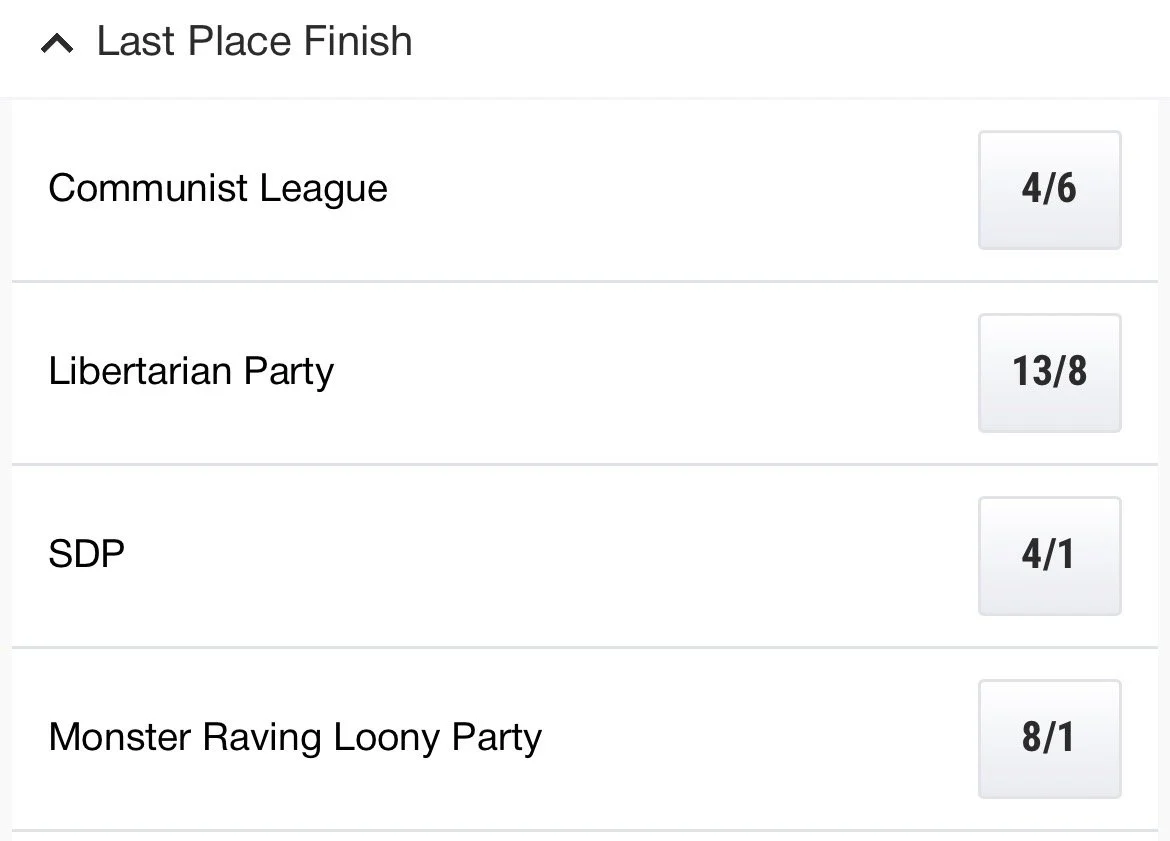
Ladbrokes is the first firm to offer additional markets on the Gorton and Denton by-election. One market in particular stands out: the “Last Place Finish.” I think this market could be more competitive than the betting suggests, especially the top four. If the major parties soak up 98% or more of the vote, that would leave just 1–2% combined for all the smaller parties. Within such a narrow share, the difference between finishing third from bottom and coming last could be as little as 50–150 votes
Communist League (4/6)
• Hugo Wils is the Communist League’s candidate in this by-election.
• He works on the shop floor of an aerospace factory and is a member of Unite the Union.
• A rank-and-file worker rather than a career politician — this fits how the Communist League often approaches elections: they nominate activists or workers involved in trade union activity.
• His campaign rhetoric focused on working-class power, opposition to war, defending jobs and living standards, and describing the party as a voice for “the peace party”.
• Wils isn’t a lifelong local celebrity or councillor, but as a factory worker and union member in the region, he’s arguably more rooted in local working-class activism than an outside parachute candidate.
Libertarian Party UK (13/8)
• Dan Clarke is the Libertarian Party candidate here.
• He’s also Libertarian Party Northern Co-ordinator, showing organisational ties to the region.
• Clarke previously stood for the Liberal Party in Runcorn & Helsby (2024 general election) and a 2025 by-election.
• Libertarians in the UK advocate minimal government, low taxes, and civil liberties.
• He’s identified as the Northern coordinator, suggesting broader regional involvement but not necessarily deep local roots in Gorton & Denton.
SDP (4/1)
• Sebastian Moore is the SDP candidate in this by-election.
• He serves as the North West Chair of the SDP and has stood in other elections (e.g., Manchester Central in 2024).
• As regional chair, Moore is one of the more organised figures among the four minor parties here — SDP is small but not fringe in the sense of novelty.
• His campaign talks about housing, local cohesion, and empowering communities
Monster Raving Loony Party (8/1)
• Sir Oink A-Lot is standing as the Monster Raving Loony Party candidate.
• The party is known for quirky and satirical campaigns.
• Monster Raving Loony candidates are often eccentric or humorous figures, sometimes with past experience running in local elections.
• Sir Oink A-Lot previously stood for the party in the 2015 Oldham West & Royton by-election and in a 2023 Manchester City Council election.
• His past runs in Greater Manchester (e.g., Manchester City council polls) suggest some regional familiarity, even if not serious mainstream campaigning
I think we are dealing with very small margins here, so it may be worth taking a punt on both the SDP and the MRLP. At 9/4 for either to finish last, the price looks tempting.
The SDP does not appear to dominate any obvious electoral lane. Positioning itself as socially conservative but economically left-leaning, it lacks a clear novelty factor and arguably suffers from a “too sensible to protest, too small to win” problem. Some voters who might otherwise cast a joke vote could instead vote tactically, which would hurt the MRLP. In a crowded by-election ballot, the novelty factor can also become diluted.
Meanwhile, a guaranteed 150–250 “hard” votes for the Communist League may prevent it from finishing last. Gorton and Denton has an industrial history, a strong union presence, and a longstanding Labour tradition. A candidate presenting as a shop-floor worker and union member arguably fits the local narrative more naturally than a satirical option. They are also likely to campaign actively and represent a defined ideological base, with a clear pitch centred on workers’ rights, anti-war policies, and public ownership.
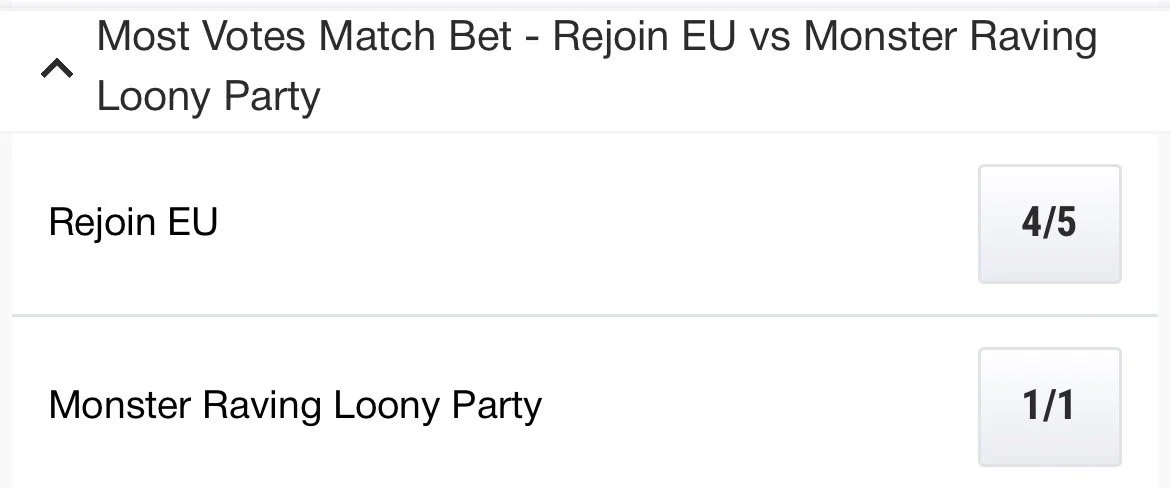
The match bet below is interesting — the 4/5 on Rejoin EU particularly appeals to me.
Urban, younger, and more diverse electorates tend to be more pro-EU and internationalist, and are generally more receptive to single-issue pro-EU messaging. Even if Brexit is no longer front-page news, a small but committed pro-EU bloc still exists. In most serious urban seats, that bloc is likely larger than the traditional “novelty vote” constituency.
In a pro-Remain area, Rejoin EU arguably has a higher potential ceiling than many of the other minor parties in the field.